
Any company that runs processes on data is living with risk. The risk is not bookish. It comes abruptly, without warning, when a system failure disrupts the usual order and forces people to make decisions at speed, often on nerves, sometimes blindly.
The reasons may vary, but the pattern repeats itself. Equipment failure, human error, cyber incidents, and sometimes natural disasters and now the availability of data is falling, the infrastructure is behaving strangely, and downtime ceases to be a word from the report and becomes direct damage. According to industry statistics, serious downtime often costs more than 100,000 monetary units, and some cases exceed the threshold of 1,000,000. Such figures leave no room for complacency.
There is also an unpleasant detail that many underestimate. “Classic” failures may occur less frequently, but cyber risks are increasing, and it is cyber incidents that increasingly lead to the most severe downtime. Therefore, data backup and disaster recovery are no longer “good”, but an essential part of business continuity and risk management, especially if the availability of digital resources, including the qa domain name, is critical for work.
Where The Breakdown Begins: From Data Loss To Operational Paralysis

Data is not just files. These are financial records, operational logs, customer information, databases, accounting systems, internal services, and integrations that link everything into a single loop. When critical data becomes unavailable, operational stability collapses quickly. Employees are idle. The processes are stopped. Decisions are made based on an incomplete picture, and sometimes on assumptions.
And then a dangerous illusion arises. It seems that “there are copies”, which means that everything is under control. But backups without a clear recovery plan are like an emergency exit littered with boxes: technically it exists, but it won’t save you in a real fire.
Backup Strategy: Full, Incremental, Differential

Backups are a strategy, not a single action. It includes method selection, scheduling, storage, security, recovery testing, and data and priority management.
A full backup creates a complete snapshot of the dataset at a specific point in time. This is the foundation and the base point of recovery. Recovery is usually easier because everything is assembled in one set. But the cost is clear: more time, more resources, more storage needs.
Incremental copies save money. They only save what has changed since the last copy. The process is faster. The load is lower. However, recovery becomes more complicated: the last complete copy and all subsequent incremental steps are needed. If the chain is long, downtime can grow exactly when the business needs the opposite.
Differential backup stores all changes since the last full backup. Recovery is easier than with the incremental approach: a full copy and the latest differential copy are sufficient. But the volume of such copies grows over time, which means that storage and management requirements are increasing.
In practice, the combination is important. Full copies provide support. Incremental ones reduce your daily workload. Differential medications help speed up recovery at a critical moment. This creates a more stable balance between cost, speed, and reliability.
Disaster Recovery, RTO, And RPO: When Time Becomes The Critical Asset
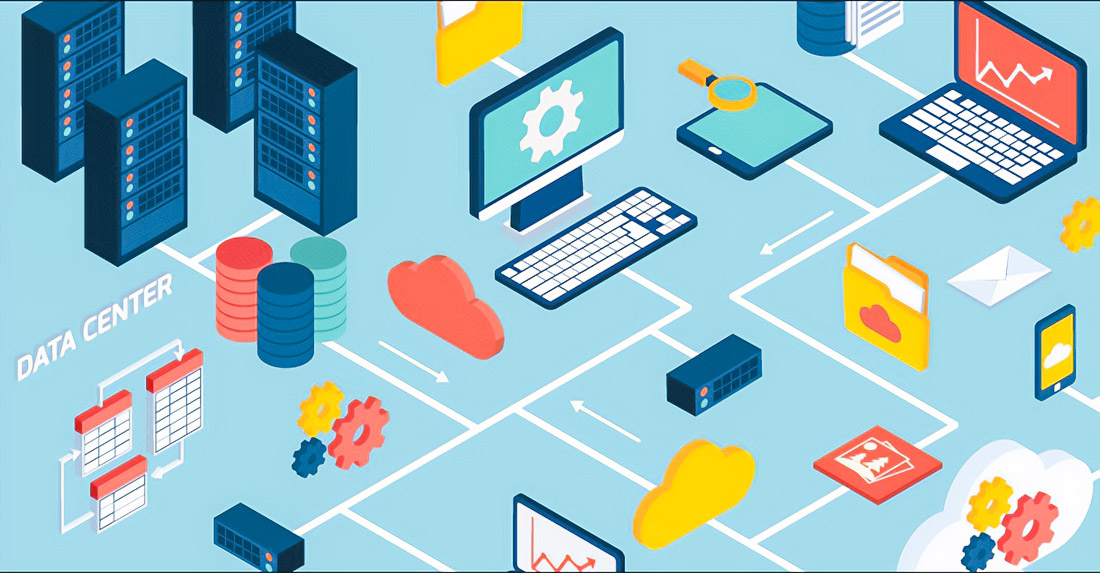
Backups are not needed for show. They are needed to restore operations. Therefore, the focus is on RTO and RPO indicators acceptable downtime and acceptable data loss. This is not a theory. These are the boundaries that a business sets in advance in order to act quickly and without unnecessary disputes in a crisis.
But willingness often falls below confidence. There is a noticeable gap: 94% of organizations believe they are able to respond to an emergency, but only 26% have actually developed and implemented a recovery plan. The difference is huge. She explains why many failures turn into a long, painful downtime.
Backup Security: Encryption, Access Control, And Immutability
Backup storage is not a “quiet corner”. He’s being attacked too. If an attacker gets access to backups, the scenario becomes especially difficult: there is nothing to recover from, and the downtime stretches to the limit.
Therefore, backup data protection should be layered. Encryption is needed during storage and transmission. Strict access control is needed. https://en.wikipedia.org/wiki/Multi-factor_authentication
is required. And immutability mechanisms are needed so that copies cannot be imperceptibly changed or deleted.
And one more point is often ignored. Recovery testing. Regular. Practical. Without it, the backup strategy remains a beautiful scheme on paper, rather than a mechanism to protect information and minimize downtime.
Stability Is Built On Execution, Not Assumptions
Business continuity does not appear by chance. It consists of the following disciplines: data management, risk assessment, backup, disaster recovery, security, testing, and regular process updates.
There will be failures. There will be cyber incidents too. Human mistakes are inevitable. But a company that has built a backup and recovery strategy in advance returns to normal operation faster, loses less, and maintains operational stability where others have been sorting out the consequences for weeks.

Fixie owner, vegan, ukulelist, reclaimed wood collector and doodler. Making at the fulcrum of aesthetics and function to answer design problems with honest solutions. German award-winning designer raised in Austria & currently living in New York City.